Lighting Mistakes in Live Studios and How to Avoid Them
Most lighting problems on a live set are planned in, not suffered by chance. Here are the errors we meet most often in studio lighting and rigging, and the habits that prevent them.
6 min read
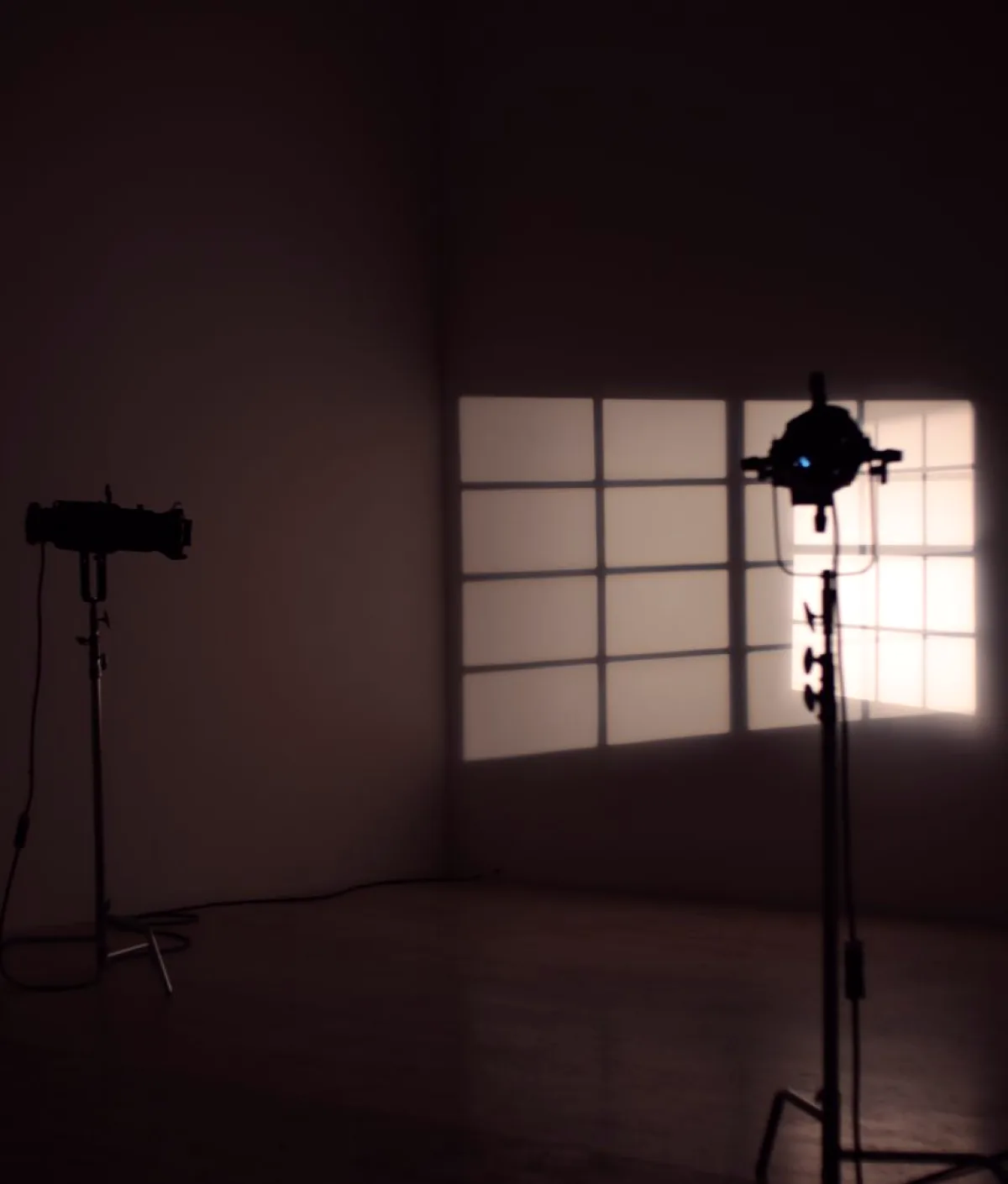
Lighting the set before the shots are decided
The most common mistake is also the earliest one: a lighting plan drawn up before anyone has settled where the cameras will stand. A grid of fixtures looks sensible on paper, yet once the presenter desk, the guest sofa and the wide shot are fixed, half the positions turn out to throw light at the wrong angle or straight into a lens.
The remedy is dull but reliable. Agree the camera positions, the lens range and the movement of presenters first, then place fixtures to serve those frames. A key light that suits the main camera may still leave a second angle flat, so each shot gets checked against the plan rather than assumed to be covered.
When we begin a studio project I ask for a rough floor plan with furniture marked and the main shots sketched in. It takes an afternoon to produce and saves days of refocusing later, because every fixture then has a reason to be where it is.
- Fix camera positions before fixture positions
- Mark furniture and presenter movement on the floor plan
- Check each planned shot, not only the main one
Mixing colour temperatures on one set
Daylight through a studio window, tungsten practicals on a bookcase and LED panels overhead will not agree with one another. On camera the result is a presenter whose face drifts between warm and cool as they turn, and a picture editor spends the whole programme correcting it.
Choose one colour temperature for the set and hold to it. Where a window cannot be blocked, either filter it or accept it as a background feature and set the cameras to suit the dominant source. Decorative lamps in the frame should use the same temperature as the main lighting.
Fixtures of mixed age cause the same trouble more quietly. Panels bought in different years often differ in colour rendering even when both claim the same rating, so test them side by side on a skin tone before they share a rig.
- Pick a single colour temperature for the whole set
- Block or filter windows that cannot be relied on
- Compare old and new fixtures on a real face before mixing
Rigging without respecting the grid
Rigging errors rarely announce themselves until something has gone wrong. Fixtures hung from a grid without checking its rated load, clamps tightened by feel, and safety bonds left off because a lamp is only going up for a week are the habits that cause incidents.
Every fixture needs a known weight, a suitable clamp and a secondary safety attachment, and the total on each section of grid should be written down and compared with what the structure is rated to carry. This is routine work for a competent rigger and it should never be skipped for speed.
Access matters too. A fixture that can only be reached with a borrowed ladder will not be refocused, so it stays wrong. We plan rigging with a safe way to reach each position, whether a tower, a hoist or a walkway, and we ask who will be doing the adjusting.
- Record fixture weights against the grid's rated load
- Use a secondary safety bond on every hung fixture
- Plan safe access to every position that needs refocusing
Leaving dimmer control as an afterthought
Fixtures are bought with care and the control is added at the end, often with whatever desk is nearest. The consequence is a set that cannot be reset between items, so a news bulletin and an interview share one compromised look, and operators are afraid to touch anything.
Think about how the lights will actually be used on air. Which looks must be recalled quickly, who operates them, and whether one person is running lights while also doing something else. Saved scenes for each programme format let a crew move from one to the next without improvising.
Dimming curves deserve a test as well. LED fixtures can step or flicker at low levels, and flicker that the eye misses will show on camera at certain shutter settings. We run every fixture through its range on camera before the handover, not only at full output.
- Save a scene for each programme format
- Test low-level dimming on camera, not by eye
- Decide who operates the desk during the show
Lighting flat because it is safe
Faced with unpredictable guests, many studios flood the set with even, shadowless light. It is safe, and it makes everything look like a corporate video. Faces lose their shape, the background merges with the foreground, and the picture has no depth.
A little separation goes a long way. A key light from one side, a softer fill, and a back light that lifts the shoulders away from the backdrop will make the same people look better without making the set harder to run. The aim is consistent light that still has direction.
Priya Nair, who plans our camera and lighting positions, often points out that skin tones vary widely across a single programme. A setup tuned for one presenter can look harsh on a guest with paler or darker skin, so exposure is checked on more than one person during rehearsal.
- Use key, fill and back light rather than flat flooding
- Keep background light separate from face light
- Check exposure on several different skin tones in rehearsal
Skipping the walk-through before air
Even a sound plan fails if nobody walks it. Lights get knocked during a set change, a barn door is left half closed, or a fixture drifts as a clamp loosens, and the first anyone knows is when the picture goes live.
Build a short check into the routine. Before each broadcast, someone who understands the plan stands in each presenter position under the live look and watches the monitors, rather than trusting that last week's setup still holds.
Keep a simple record of focus and scene settings, with photographs of the rig. When something shifts, the record shows what it should look like, and a crew member can restore it without calling an engineer.
- Stand in each presenter position under the live look
- Photograph the rig and keep settings on record
- Re-check after any set change or reconfiguration
Good studio lighting is mostly the result of ordinary discipline: deciding the shots first, holding one colour temperature, rigging within the limits of the grid, planning control around real use and checking the result before air. None of this needs expensive equipment. It needs a plan that someone has walked through and a crew who know how to restore it. If your studio shows any of these faults, we are glad to talk it through.
Oliver Hartley
Founder and Technical DirectorOliver has worked in live television engineering for over twenty years and leads system design on every project.